
Whether you are starting a fitness journey, improving your endurance, or simply learning more about your body, understanding your resting heart rate can help you recognize patterns in your health and physical activity.
But what is a normal resting heart rate? Is a lower number always better? And what can you do if your resting heart rate seems higher than expected?
In this FitMivo guide, you will learn how resting heart rate works, how to measure it correctly, which factors influence it, and how everyday habits can support a healthy cardiovascular system.
Key Takeaways
- A typical resting heart rate for adults is 60–100 beats per minute (bpm).
- Some healthy, well-trained athletes have resting heart rates below 60 bpm.
- Stress, sleep, illness, hydration, medications, and exercise can affect your reading.
- Measuring your pulse under consistent conditions helps you understand your usual pattern.
- A heart rate reading alone cannot diagnose a medical condition.
What Is Resting Heart Rate?
Resting heart rate, often abbreviated as RHR, is the number of times your heart beats in one minute while you are awake, relaxed, and not physically active.
Your heart is a muscular organ that circulates blood throughout your body. During physical activity, your muscles need more oxygen, so your heart generally beats faster to deliver the blood they need. When you rest, your body’s demand for oxygen usually decreases, allowing your heart rate to slow down.
Resting heart rate is one of several measurements that can provide information about your health. It is commonly used alongside other indicators, such as blood pressure, physical activity, sleep quality, and symptoms.
People do not all have the same resting heart rate. Two healthy adults can have different readings because of differences in fitness, genetics, age, medications, and other individual factors.
What Is a Normal Resting Heart Rate?
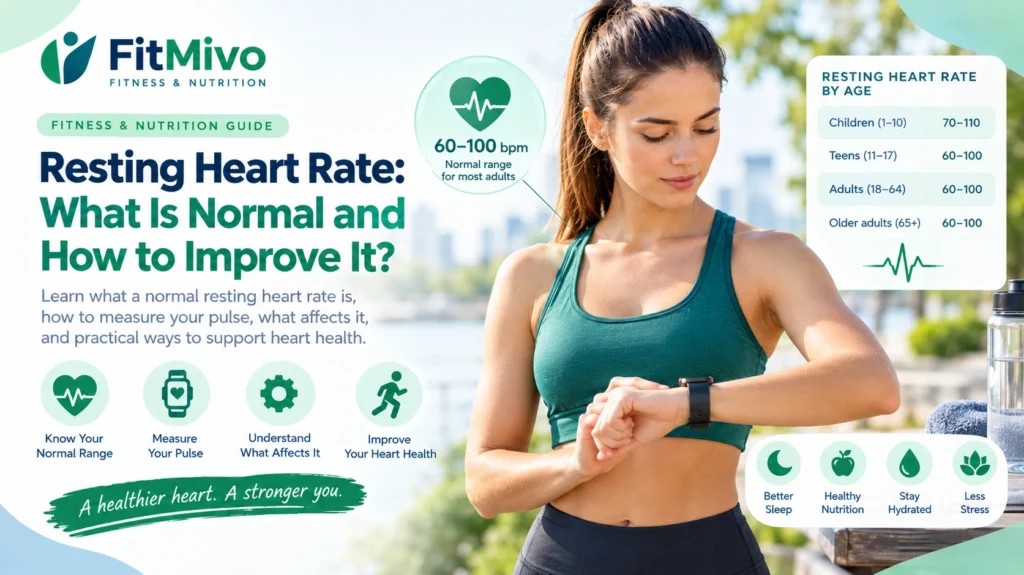
According to the American Heart Association, a typical resting heart rate for most adults is between 60 and 100 beats per minute.
This range applies when you are awake, calm, and resting. Your heart rate may temporarily fall outside it because of exercise, stress, fever, medication, or other circumstances.
| Resting Heart Rate | What It May Mean |
|---|---|
| Below 60 bpm | May be normal for some athletes and healthy adults. Medications and medical conditions can also cause a lower rate. |
| 60–100 bpm | The typical resting heart rate range for most adults. |
| Above 100 bpm | A sustained resting rate above this level is called tachycardia in adults and may need medical evaluation. |
Important: These numbers are general reference points, not a diagnosis. Your usual heart rate, medical history, medications, and symptoms all matter. A single reading outside the typical range does not necessarily mean something is wrong.
Is a Lower Resting Heart Rate Always Better?
Not necessarily. A lower resting heart rate can be associated with better cardiovascular fitness, particularly in people who exercise regularly. The heart may become more efficient at pumping blood, so it does not need to beat as frequently to meet the body’s needs at rest.
However, lower is not automatically better for everyone. A slow heart rate can sometimes be associated with a medical condition or the effects of medication.
For example, a well-trained athlete may have a resting heart rate below 60 bpm without experiencing any problems. Another person with a similarly low reading may need medical assessment if they also experience dizziness, unusual fatigue, weakness, or fainting.
The most useful approach is to understand your normal pattern and pay attention to persistent changes or symptoms rather than trying to reach an arbitrary number.
Resting Heart Rate by Age
Expected heart rates vary with age. Children generally have faster resting heart rates than adults, while the commonly used reference range for adults and older adults is 60–100 bpm.
| Age Group | General Reference |
|---|---|
| Infants and young children | Generally have faster heart rates than adults; the expected range depends on age. |
| Children and adolescents | Expected values vary by age and development. |
| Adults | Typically 60–100 bpm at rest. |
| Well-trained athletes | May have resting rates below 60 bpm. |
These are broad descriptions rather than a detailed pediatric reference chart. For children, use age-specific guidance from a reliable medical source or consult a healthcare professional.
For adults, age alone does not determine the ideal resting heart rate. Fitness, health conditions, medications, and individual variation can be equally important.
Resting Heart Rate vs. Exercise Heart Rate
Your resting heart rate and exercise heart rate describe different situations.
- Resting heart rate: The number of heartbeats per minute when you are awake, calm, and resting.
- Exercise heart rate: The number of heartbeats per minute during physical activity. It usually rises as exercise intensity increases.
- Recovery heart rate: The change in heart rate after exercise stops. How quickly your heart rate falls can provide information about recovery, but interpretation depends on how it is measured and your overall health.
During exercise, your heart must deliver more oxygen to working muscles. Therefore, a higher heart rate during a workout is a normal response to increased physical demand.
If you want to understand exercise intensity and training zones, the American Heart Association’s target heart rate guide provides additional information.
Do not compare your exercise heart rate directly with the normal resting range. They measure different things and must be interpreted in the right context.
How to Measure Your Resting Heart Rate Correctly
You can measure your resting heart rate at home using your fingers and a clock or timer. A smartwatch or fitness tracker may also provide a reading, although wearable devices are not always accurate.
Step 1: Choose a Consistent Time
Morning is a convenient time for many people. Check your pulse shortly after waking, before exercise or caffeine, and under similar conditions each day.
Step 2: Rest Before Measuring
If you have already been moving around, sit or lie down quietly for several minutes. Measuring immediately after walking, climbing stairs, or exercising will not give you a true resting reading.
Step 3: Find Your Pulse
Place the tips of your index and middle fingers on the inside of your opposite wrist, below the base of your thumb. Press gently until you feel the pulse.
Avoid using your thumb because it has its own pulse. The wrist is a convenient location for most people.
Step 4: Count the Beats
Count the number of beats for a full 60 seconds, especially if your pulse seems irregular. The result is your heart rate in beats per minute.
Step 5: Record Your Result
Write down the reading along with the date and any relevant circumstances, such as poor sleep, illness, or unusually intense exercise the previous day.
Repeat the process over several days to understand your typical pattern. A series of consistent measurements is generally more useful than reacting to one isolated number.
For further instructions, see Mayo Clinic’s guide to taking your pulse.
What Can Affect Your Resting Heart Rate?
Your resting heart rate is not fixed. It can change from day to day in response to your activity, environment, emotional state, and health.
1. Physical Fitness
Regular aerobic exercise can improve the efficiency of your cardiovascular system. Over time, some people notice a gradual decrease in resting heart rate as their fitness improves.
2. Stress and Anxiety
Stress can activate the body’s fight-or-flight response, increasing heart rate. A temporary rise during an anxious or emotionally demanding moment is not necessarily a sign of a heart problem.
3. Sleep Quality
Insufficient sleep or disrupted sleep may affect your usual heart rate and recovery. Tracking sleep alongside your pulse may help you notice patterns.
4. Hydration
Dehydration can affect circulation and may cause your heart to beat faster. Fluid needs vary according to activity, weather, body size, and health.
5. Caffeine, Nicotine, and Alcohol
Caffeine and nicotine can raise heart rate in some people. Alcohol can also affect heart rate and sleep. Your response depends on the substance, amount, timing, and individual sensitivity.
6. Illness and Fever
Fever, infection, pain, and other illnesses may increase resting heart rate. If your reading rises while you feel unwell, consider the broader symptoms rather than interpreting the number in isolation.
7. Medications
Some medications can raise heart rate, while others—including certain medicines used to treat heart conditions or high blood pressure—can lower it. Do not change or stop prescribed medication without professional guidance.
8. Medical Conditions
Conditions involving the heart, thyroid, blood, or other body systems can influence heart rate. A persistent, unexplained change deserves medical attention, especially when accompanied by other symptoms.
How to Support a Healthy Resting Heart Rate
You cannot control every factor that affects your pulse, but you can adopt habits that support cardiovascular health. The aim is not to force your heart rate down quickly; it is to improve your overall health in a safe, sustainable way.
1. Exercise Consistently
Walking, cycling, swimming, dancing, and other aerobic activities can help improve cardiovascular fitness. Choose activities you enjoy so you are more likely to maintain them.
If you are new to exercise, start with manageable sessions and increase duration and intensity gradually. Anyone with a known heart condition, concerning symptoms, or medical restrictions should seek guidance before changing their exercise routine.
2. Get Enough Sleep
Consistent sleep supports recovery and general well-being. Try to maintain a regular bedtime and waking time, reduce distractions in your bedroom, and create a relaxing routine before sleep.
3. Practice Stress Management
Slow breathing, meditation, gentle stretching, and relaxing outdoor activities may help you manage stress. These practices do not replace medical care, but they can be useful parts of a balanced routine.
4. Stay Hydrated
Drink fluids regularly and adjust your intake to your activity level and environment. You may need more fluids when exercising or spending time in hot weather. Follow any fluid restrictions given to you by your healthcare professional.
5. Follow a Balanced Eating Pattern
Build meals around vegetables, fruits, whole grains, suitable protein sources, and unsaturated fats. A balanced diet supports general health and provides energy for daily activities and exercise.
Your overall energy needs also depend on how active you are. Our guide to Total Daily Energy Expenditure (TDEE) explains how your body uses energy throughout the day.
6. Be Mindful of Stimulants
If caffeine or nicotine appears to affect your heart rate, consider reducing exposure where appropriate. Avoid using unverified supplements or products marketed as quick fixes for heart rate or cardiovascular health.
7. Allow Time for Recovery
Exercise is only one part of a fitness routine. Rest days, adequate nutrition, and sufficient sleep help your body recover between demanding sessions.
If your resting heart rate is unusually elevated compared with your normal pattern and you also feel unwell or excessively fatigued, consider reducing intense activity and seeking medical advice when appropriate.
Resting Heart Rate and Your Fitness Progress
Tracking resting heart rate can provide one useful data point as you develop healthier habits. For some people, a gradual decrease over time may accompany improvements in aerobic fitness.
However, resting heart rate is not a complete measure of fitness. A single number cannot tell you everything about your strength, endurance, recovery, or cardiovascular health.
Consider tracking several indicators together:
- Your resting heart rate measured under consistent conditions.
- Your energy levels and perceived effort during exercise.
- Your sleep quality and recovery between workouts.
- Your ability to perform everyday activities comfortably.
- Any new or persistent symptoms.
FitMivo also offers guides to other commonly used health and fitness measurements. Each describes a different aspect of your body and should be understood within its limitations.
Explore More FitMivo Guides
What Is BMI? A Complete Guide to Body Mass Index
Learn what BMI measures, how it is calculated, and why it cannot assess health on its own.
What Is BMR? A Complete Guide to Basal Metabolic Rate
Understand how much energy your body uses to maintain basic functions at rest.
What Is TDEE? A Complete Guide to Total Daily Energy Expenditure
Discover how resting energy needs and daily activity contribute to total energy expenditure.
Remember that BMI estimates weight relative to height, BMR estimates energy used for basic functions at rest, and TDEE estimates total daily energy expenditure. None of these measurements directly diagnoses a heart condition or replaces a medical assessment.
When Should You Seek Medical Advice?
A reading outside the typical adult range does not automatically mean that you have a medical condition. However, you should speak with a healthcare professional if your resting heart rate is repeatedly higher or lower than usual without an obvious explanation.
Medical advice is particularly important if changes in your heart rate occur with symptoms such as:
- Unusual weakness or fatigue.
- Dizziness or light-headedness.
- Feeling as though you might faint.
- Repeated episodes of a racing or irregular heartbeat.
- Shortness of breath that is new or unusual for you.
Seek emergency medical care if an unusually fast, slow, or irregular heartbeat occurs with chest pain, severe difficulty breathing, fainting, or other severe symptoms. Do not delay emergency care to take repeated measurements.
If you take medication that affects your heart rate, ask your healthcare professional what range is appropriate for you and whether you should monitor your pulse at home.
Frequently Asked Questions
1. What is a good resting heart rate for adults?
For most adults, a resting heart rate of 60–100 bpm is considered typical. Your personal circumstances, usual readings, medications, and symptoms can affect how your result should be interpreted.
2. Is a resting heart rate of 55 bpm normal?
It can be normal for some healthy adults, particularly well-trained athletes. However, if this reading is unusual for you or occurs with dizziness, fainting, weakness, or unusual fatigue, seek medical advice.
3. Is a resting heart rate of 90 bpm too high?
A reading of 90 bpm is within the typical adult reference range of 60–100 bpm. Whether it is concerning depends on your normal pattern, symptoms, and health history.
4. Can exercise lower resting heart rate?
Regular aerobic exercise can improve cardiovascular fitness and may lower resting heart rate over time. The response varies between individuals, and exercise should be appropriate for your health and current fitness level.
5. What is the best time to check resting heart rate?
Morning, shortly after waking and before exercise or caffeine, is a convenient time for many people. Measuring at a similar time and under similar conditions makes it easier to compare readings.
6. Why is my resting heart rate higher than usual in the morning?
Several factors can influence your reading, including poor sleep, stress, dehydration, illness, alcohol, medications, and recent strenuous exercise. If the increase persists or occurs with symptoms, consult a healthcare professional.
7. Can a smartwatch accurately measure resting heart rate?
Many smartwatches and fitness trackers can estimate heart rate and help you observe trends. However, accuracy varies by device and circumstances. If a reading seems unusual or conflicts with how you feel, confirm it with a careful manual measurement and seek medical advice when appropriate.
8. Should I try to get my resting heart rate as low as possible?
No. The goal is not to achieve the lowest possible number. A healthy resting heart rate varies between individuals, and an unusually low rate can sometimes indicate a problem. Focus on sustainable habits and discuss persistent concerns with a healthcare professional.
9. Does resting heart rate increase during illness?
It can. Fever, infection, dehydration, pain, and other physical stresses may increase heart rate. Consider your symptoms and overall condition, and seek medical advice if you are concerned.
10. Is resting heart rate enough to assess heart health?
No. Resting heart rate is only one measurement. A healthcare professional may consider your medical history, symptoms, blood pressure, examination, and additional tests when assessing cardiovascular health.
Final Thoughts
Your resting heart rate is a simple measurement that can help you understand one aspect of your cardiovascular health. For most adults, 60–100 beats per minute is the typical reference range, but individual circumstances matter.
Measure your pulse under consistent conditions, track your usual pattern, and avoid drawing conclusions from a single reading. Regular physical activity, sufficient sleep, balanced nutrition, hydration, stress management, and appropriate recovery can all contribute to your overall well-being.
Most importantly, remember that resting heart rate is one piece of information—not a diagnosis and not a score you need to push as low as possible. If your readings change persistently or you experience concerning symptoms, speak with a qualified healthcare professional.
Sources and Further Reading
Medical disclaimer: This article is for general educational purposes only. It is not a substitute for professional medical advice, diagnosis, or treatment. Always consult a qualified healthcare professional about personal health concerns.