
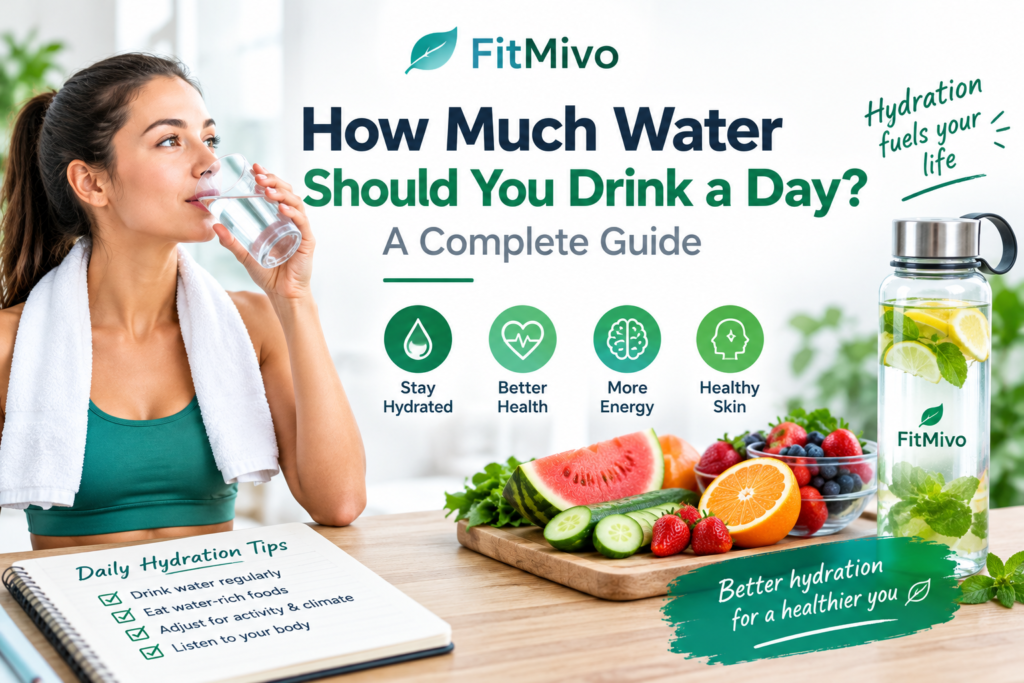
Water is essential for nearly every function in your body. It helps regulate body temperature, transport nutrients, support digestion, and maintain normal circulation. But how much water should you drink a day to stay properly hydrated?
You may have heard that everyone should drink eight glasses of water daily. Although this can be a useful reminder for some people, your actual fluid needs depend on several factors, including your age, activity level, climate, diet, and overall health.
In this FitMivo guide, you will learn how to estimate your daily water needs, recognize signs that you may need more fluids, and develop practical habits to stay hydrated.
Table of Contents
- How much water should you drink a day?
- Recommended daily water intake
- What affects your water needs?
- Signs you may not be drinking enough water
- What happens when you become dehydrated?
- Foods that help you stay hydrated
- Practical tips for drinking enough water
- Can you drink too much water?
- Frequently asked questions
How Much Water Should You Drink a Day?
Your daily water needs depend on how much fluid your body loses and how much it receives from drinks and food. You lose water through urine, sweat, breathing, and normal bodily functions. Hot weather, exercise, and illness can increase these losses.
The National Academies of Sciences, Engineering, and Medicine in the United States established the following adequate intake levels for total water for healthy adults:
| Group | Daily total water reference |
|---|---|
| Adult women | About 2.7 liters (91 US fluid ounces) |
| Adult men | About 3.7 liters (125 US fluid ounces) |
| Pregnant adults | About 3.0 liters (101 US fluid ounces) |
| Breastfeeding adults | About 3.8 liters (128 US fluid ounces) |
These values are reference estimates, not strict targets that every person must meet. They represent total water from drinking water, other beverages, and food. Individual needs can be higher or lower.
How Much Plain Water Should You Drink?
Because food and other beverages contribute to your total water intake, the amount of plain water you need to drink will usually be less than the total-water figures shown above.
For example, fruits, vegetables, soups, milk, and other drinks provide fluids. Your needs may also change from one day to the next depending on the weather and how active you are.
Instead of following a rigid rule, start by drinking regularly throughout the day and increase your fluid intake when you are sweating more than usual. Thirst and the color of your urine can provide useful clues, although neither is a perfect measure for every person.
What Affects Your Daily Water Needs?
1. Physical activity
Exercise increases fluid loss through sweat. If you walk, run, cycle, lift weights, or participate in sports, you may need to drink more than you normally would. Longer or more intense workouts generally require greater attention to hydration.
2. Hot or humid weather
High temperatures and humidity can increase sweating. If you spend time outdoors in hot weather, drink fluids regularly and take breaks in cooler areas when possible.
3. Body size
People with different body sizes can have different fluid requirements. However, there is no single simple formula based only on body weight that is appropriate for everyone.
4. Diet
Water-rich foods such as cucumbers, watermelon, oranges, strawberries, tomatoes, and soups contribute to your daily fluid intake. A diet containing more salty foods may also increase thirst.
5. Pregnancy and breastfeeding
Fluid needs may increase during pregnancy and breastfeeding. Follow the advice of your healthcare professional, especially if you have other health conditions or concerns.
6. Illness and medications
Fever, vomiting, and diarrhea can increase fluid loss. Some medicines and medical conditions can also affect fluid balance. Ask a healthcare professional how much you should drink if you have a condition that affects your kidneys, heart, or body's ability to regulate fluids.
Signs You May Not Be Drinking Enough Water
Possible signs of dehydration include:
- Feeling thirsty.
- Dark yellow urine or urinating less often than usual.
- A dry mouth or dry lips.
- Headache or unusual tiredness.
- Dizziness, especially when standing up.
- Reduced exercise performance in hot conditions.
These signs can have other causes, so they do not prove that dehydration is the problem. Urine color is also affected by some foods, supplements, and medications.
What Happens When You Become Dehydrated?
Dehydration occurs when your body loses more fluid than it takes in. Mild dehydration may cause thirst, tiredness, or a headache. More significant fluid loss can interfere with normal body functions and may become dangerous.
Dehydration is more likely during prolonged exercise, hot weather, fever, vomiting, or diarrhea. Replacing fluids is important, and oral rehydration solutions may be appropriate for certain illnesses involving fluid and electrolyte loss.
If you have ongoing vomiting or diarrhea, symptoms are severe, or you are unsure how to replace lost fluids, contact a healthcare professional.
Foods That Help You Stay Hydrated
You do not get water only from a glass or bottle. Many everyday foods contain substantial amounts of water and contribute to total fluid intake.
| Food | How it supports hydration |
|---|---|
| Watermelon | Contains a high proportion of water. |
| Cucumber | A water-rich vegetable that works well in salads and snacks. |
| Oranges | Provide water along with vitamin C and other nutrients. |
| Strawberries | Provide water, fiber, and vitamin C. |
| Tomatoes | Contain water and can be added to many meals. |
| Soups and broths | Can contribute fluids as part of a balanced diet. |
These foods complement drinking fluids; they do not need to replace water entirely. Choose a variety of foods that fit your dietary needs.
10 Practical Tips for Drinking Enough Water
- Start your day with a drink. Keep a glass of water near your breakfast routine.
- Carry a reusable bottle. Having water nearby can make drinking regularly easier.
- Drink with meals. Make water a regular part of breakfast, lunch, and dinner.
- Drink when you feel thirsty. Thirst is a useful signal for many healthy adults.
- Increase fluids during exercise. Adjust your intake to the duration, intensity, and conditions of your activity.
- Plan for hot weather. Drink regularly and limit prolonged exposure to extreme heat.
- Eat water-rich foods. Include fruits, vegetables, and soups in your meals.
- Make water more appealing. Try chilled water or add lemon, cucumber, or mint for flavor.
- Notice changes in your routine. Travel, exercise, heat, and illness can change your needs.
- Follow medical advice when necessary. Some health conditions require fluid restrictions or individualized guidance.
Can You Drink Too Much Water?
Yes. Drinking excessive amounts of water, especially very quickly, can dilute the sodium in your blood. This condition is called hyponatremia and can be dangerous.
There is no need to force yourself to drink large amounts of water beyond your needs. During prolonged or intense exercise, fluid replacement should be appropriate for your sweat losses and activity. Drinking more is not always better.
People with kidney disease, heart failure, or certain other medical conditions may be advised to limit fluids. If you have been given a fluid restriction, follow your healthcare professional's instructions rather than a general online recommendation.
Does Coffee or Tea Count Toward Daily Water Intake?
Yes. Coffee, tea, milk, and other beverages contribute to total water intake. Although caffeine can have a mild diuretic effect, moderate coffee and tea consumption still contributes fluid for many habitual consumers.
Plain water remains an excellent everyday choice because it hydrates without added sugar. Sugary drinks may contribute excess calories, so consider your overall nutrition goals when choosing beverages.
Is Drinking Water Helpful for Weight Management?
Water supports normal digestion, circulation, and temperature regulation, but drinking extra water alone does not guarantee weight loss.
Choosing water instead of sugar-sweetened beverages may help reduce calorie intake. Sustainable weight management also depends on eating patterns, physical activity, sleep, and other factors.
To understand your broader energy needs, read our guides:
- What Is TDEE? A Complete Guide to Total Daily Energy Expenditure
- What Is BMR? A Complete Guide to Basal Metabolic Rate
- How Many Calories Do I Need a Day?
Frequently Asked Questions
1. Is eight glasses of water a day enough?
Eight glasses can be a convenient starting point, but it is not a universal requirement. Your needs depend on your activity, climate, diet, health, and the size of each glass. Remember that food and other beverages also contribute water.
2. Should I drink water even when I am not thirsty?
Drinking regularly throughout the day can be helpful, especially during exercise or hot weather. However, healthy adults generally do not need to force excessive amounts of water. Some older adults and people with certain medical conditions may need a more structured hydration plan.
3. Does drinking water help your skin?
Maintaining normal hydration supports overall health. Drinking extra water beyond your body's needs is not a guaranteed treatment for dry skin or skin conditions. Skin health also depends on factors such as skincare, environment, and underlying health.
4. Is clear urine a sign of good hydration?
Not necessarily. Pale yellow urine is often consistent with adequate hydration, but completely clear urine is not a goal you need to pursue. Urine color can be affected by medications, supplements, and other factors.
5. Do I need more water when exercising?
Often, yes. Exercise increases fluid loss through sweat, especially in hot or humid conditions. Drink according to your needs and avoid drinking so much that you gain weight during a prolonged workout from excess fluid intake.
6. Can I drink too much water in one day?
Yes. Excessive water intake, particularly over a short period, can cause dangerously low blood sodium. Avoid forcing large volumes of water and seek individualized advice if you have a condition affecting fluid balance.
7. Does water from food count toward my daily intake?
Yes. Fruits, vegetables, soups, and other foods provide water and contribute to your total daily water intake.
8. Do men and women need the same amount of water?
Not always. General reference values differ for adult men and women, but individual needs vary considerably with activity, climate, diet, body size, pregnancy, breastfeeding, and health conditions.
Key Takeaways
- There is no single daily water target that is right for everyone.
- Common adult reference values include water from food and all beverages, not only plain water.
- Exercise, hot weather, diet, pregnancy, and illness can affect fluid needs.
- Thirst and urine color can offer useful clues, but neither is perfect for everyone.
- Avoid forcing excessive amounts of water, and follow medical advice if you have a fluid restriction.
Build Healthier Habits with FitMivo
Explore practical health and fitness guides to help you understand your body, nutrition, and daily needs.
Explore FitMivoSources and Further Reading
- National Academies — Dietary Reference Intakes for Water, Potassium, Sodium, Chloride, and Sulfate
- CDC — Water and Healthier Drinks
- MedlinePlus — Dehydration
- NHS — Dehydration
Medical disclaimer: This article is for general educational purposes only and is not a substitute for professional medical advice. Fluid requirements vary. If you have kidney disease, heart disease, a prescribed fluid restriction, or a medical condition affecting hydration, consult your healthcare professional for individualized guidance.