
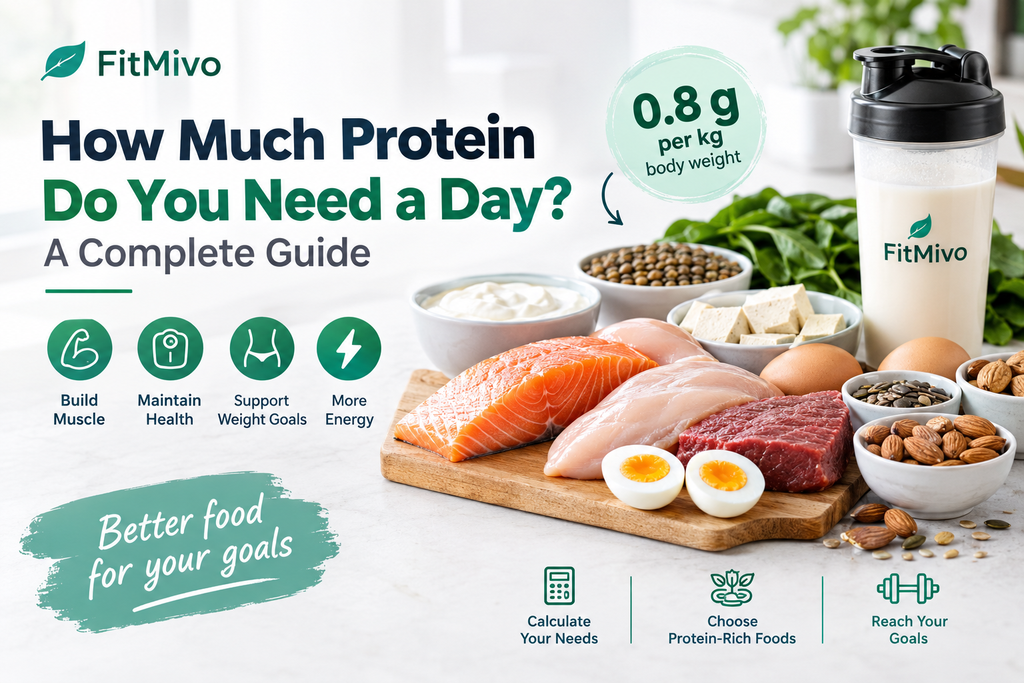
How Much Protein Do You Need a Day? A Complete Guide
Protein is an essential nutrient that helps your body build and maintain muscle, repair tissues, and support many important functions. But how much protein do you actually need each day?
Your daily protein needs depend on several factors, including your body weight, age, activity level, health, and fitness goals. Someone who exercises regularly may have different needs from someone who is less active.
In this guide, you will learn how to estimate your daily protein needs, discover common protein-rich foods, understand protein requirements for different goals, and find practical ways to include protein in a balanced diet.
Table of Contents
- What Is Protein?
- How Much Protein Do You Need a Day?
- How to Calculate Your Protein Needs
- Protein Needs for Different Goals
- Best Sources of Protein
- How to Spread Protein Throughout the Day
- Do You Need Protein Supplements?
- Common Protein Intake Mistakes
- Frequently Asked Questions
1. What Is Protein?
Protein is a nutrient made from amino acids. Your body uses these amino acids to build and maintain muscles, skin, bones, and other tissues. Protein also contributes to enzymes, hormones, immune function, and tissue repair.
Protein comes from both animal and plant foods. Common animal sources include eggs, fish, poultry, meat, milk, yogurt, and cheese. Plant sources include beans, lentils, chickpeas, soy foods, nuts, seeds, and some whole grains.
You do not have to eat meat to obtain enough protein. A varied diet that includes suitable plant-based foods can also help meet your nutritional needs.
2. How Much Protein Do You Need a Day?
There is no single daily protein target that is ideal for everyone. A useful starting point is the commonly used reference intake for healthy adults, followed by adjustments based on activity, age, goals, and individual health needs.
For many healthy adults, the reference intake is approximately 0.8 grams of protein per kilogram of body weight per day. Individual requirements can differ, and this basic calculation should not be treated as a personalized prescription.
| Body Weight | Approximate Protein per Day |
|---|---|
| 50 kg (110 lb) | 40 g |
| 60 kg (132 lb) | 48 g |
| 70 kg (154 lb) | 56 g |
| 80 kg (176 lb) | 64 g |
| 90 kg (198 lb) | 72 g |
| 100 kg (220 lb) | 80 g |
These figures are mathematical examples using 0.8 g/kg, not individualized dietary recommendations. Actual needs may differ depending on your circumstances.
Your protein requirements may be affected by regular strength training, age, pregnancy, illness, recovery needs, and medical conditions. If you have kidney disease or another condition that affects your diet, ask your healthcare professional or registered dietitian what amount is appropriate for you.
3. How to Calculate Your Daily Protein Needs
A simple way to estimate the general adult reference intake is to multiply your body weight in kilograms by 0.8.
Daily protein reference (grams) = Body weight (kg) × 0.8
Example: If you weigh 70 kg:
70 × 0.8 = 56 grams of protein per day.
If you measure your weight in pounds, divide your weight by 2.205 to convert it to kilograms before using this formula.
This calculation is only a general reference. It does not account for every factor that may influence your nutritional needs, such as training, age, health, or recovery.
Your overall energy needs also matter. Learn more in our guide to Total Daily Energy Expenditure (TDEE) or use the FitMivo TDEE Calculator.
4. Protein Needs for Different Fitness Goals
Protein for General Health
If your goal is to maintain general health, start by considering the standard reference intake and whether your usual meals contain a variety of protein sources.
A balanced eating pattern includes more than protein alone. Total energy intake, fiber, vitamins, minerals, healthy fats, and food variety all contribute to overall nutrition.
Protein for Building Muscle
Muscle growth depends on several factors, including resistance training, adequate energy intake, recovery, and sufficient protein.
People who train regularly may benefit from an intake above the basic adult reference. However, an appropriate target depends on body size, training frequency, experience, diet, and individual circumstances.
Protein alone does not build muscle without a suitable training and recovery plan. Consistent exercise, sleep, and an adequate overall diet are also important.
Protein for Weight Loss
During weight loss, it is important to maintain a balanced diet and obtain enough nutrients. Protein is one part of that plan and can help support muscle maintenance when combined with appropriate exercise.
Your calorie target is a separate consideration. Read our guide to How Many Calories Should I Eat to Lose Weight? to understand how daily energy needs relate to weight management.
Avoid extreme calorie restriction or unnecessarily high protein targets. A sustainable eating pattern is generally more practical than a rigid plan that is difficult to maintain.
Protein for Older Adults
Protein needs and the ability to maintain muscle can change with age. Older adults may benefit from reviewing their overall diet, activity, and nutritional status with a qualified healthcare professional.
Individual advice is especially important when appetite, unintended weight loss, mobility, or an existing health condition affects eating habits.
5. Best Sources of Protein
A varied diet can provide protein from many different foods. Choose options that suit your preferences, budget, culture, and dietary requirements.
| Food | Approximate Protein |
|---|---|
| 1 large egg | 6 g |
| 100 g cooked chicken breast | 30–31 g |
| 100 g cooked salmon | 22–25 g |
| 170 g plain Greek yogurt | 15–18 g |
| 1 cup cooked lentils | About 18 g |
| 1 cup cooked chickpeas | About 14–15 g |
| 100 g firm tofu | About 8–17 g |
| 30 g almonds | About 6 g |
| 1 cup milk (240 ml) | About 8 g |
Values are approximate and can vary by food variety, brand, serving size, and preparation method. Check nutrition labels when accurate tracking is important.
Animal-Based Protein
- Eggs
- Fish and seafood
- Chicken and turkey
- Lean meat
- Milk, yogurt, and cheese
These foods can provide protein alongside other nutrients. Consider the overall nutritional profile of each food, including sodium and saturated fat, and choose a variety of sources.
Plant-Based Protein
- Lentils, beans, and chickpeas
- Tofu, tempeh, and other soy foods
- Nuts and seeds
- Peas
- Whole grains such as oats and quinoa
If you follow a vegetarian or vegan diet, eating a variety of protein-rich plant foods throughout the day can help you obtain the amino acids your body needs.
6. How to Spread Protein Throughout the Day
You do not have to eat all your protein in one meal. Many people find it easier to include a protein source at breakfast, lunch, and dinner.
- Breakfast: Eggs or yogurt with oats.
- Lunch: Chicken, fish, tofu, or beans with vegetables and whole grains.
- Snack: Yogurt, nuts, or hummus, depending on your needs.
- Dinner: Lentils, fish, tofu, eggs, or another protein-rich food with vegetables and a carbohydrate source.
This is an example, not a prescribed meal plan. Portion sizes should reflect your appetite, energy needs, preferences, and health circumstances.
Consistency matters more than following a complicated schedule. Start by checking whether your regular meals include meaningful sources of protein, then adjust as needed.
7. Do You Need Protein Supplements?
Most people can obtain protein from ordinary foods. Protein powders and ready-to-drink shakes are optional conveniences, not necessities.
A supplement may be useful when it is difficult to meet nutritional needs through meals alone, but it should fit into your overall diet.
Before choosing a product, consider:
- Whether you actually need additional protein.
- The amount of protein per serving.
- Added sugars, sodium, and other ingredients.
- Allergies, dietary preferences, and food intolerances.
- Whether the product has appropriate quality testing.
More protein is not automatically better. If you have a medical condition or have been advised to follow a specific diet, consult a healthcare professional before making major changes or using supplements regularly.
8. Common Protein Intake Mistakes
Assuming Everyone Needs the Same Amount
Protein needs vary. A number that works for one person may not be appropriate for another.
Focusing on Protein Alone
A healthy eating pattern also needs adequate energy, fiber, healthy fats, vitamins, minerals, and a variety of foods.
Believing Supplements Are Essential
Protein powders can be convenient, but ordinary foods can provide protein too. Supplements should address a genuine need rather than replace a balanced diet without reason.
Ignoring Medical Needs
People with chronic kidney disease may need an individualized protein target. Both insufficient and excessive protein intake can be concerns in certain circumstances. Seek advice from your healthcare team before substantially changing your intake.
Overcomplicating Meal Planning
You do not need to calculate every gram of protein forever. Learning the approximate protein content of common foods and including a variety of sources in meals can be a practical starting point.
9. Frequently Asked Questions
How much protein do I need per day?
A commonly used reference for healthy adults is 0.8 grams per kilogram of body weight per day. Your needs may differ based on age, activity, goals, and health.
How do I calculate protein needs from body weight?
For a basic reference estimate, multiply your weight in kilograms by 0.8. For example, a person weighing 70 kg would calculate 70 × 0.8 = 56 grams per day. This is not a personalized prescription.
Can I get enough protein without eating meat?
Yes. Lentils, beans, chickpeas, tofu, tempeh, nuts, seeds, and some grains can contribute protein. Eating a variety of plant foods helps support a balanced diet.
Is more protein always better?
No. Protein needs vary, and consuming more than you need does not guarantee better results. An excessive focus on protein may also crowd out other important foods.
Do I need protein after a workout?
Including protein in your overall diet supports muscle maintenance and repair. Your total daily intake, training, energy intake, and recovery all matter. A supplement is not automatically necessary after every workout.
Can I eat too much protein?
It is possible to consume more protein than you need. The appropriate amount depends on your overall diet and health. People with kidney disease or other relevant medical conditions should seek individualized guidance.
What is the difference between protein and calories?
Protein is a nutrient, while calories measure energy. Protein provides about four calories per gram, but your total daily calorie needs also depend on carbohydrates, fats, activity, and other factors. Read How Many Calories Do I Need a Day? to learn more.
10. Key Takeaways
- Protein helps build and maintain tissues and supports many body functions.
- A commonly used reference intake for healthy adults is about 0.8 g/kg of body weight per day.
- Your ideal intake may differ depending on age, activity level, fitness goals, and health.
- Animal and plant foods can both contribute protein.
- Protein supplements are optional and do not replace a balanced diet.
- If you have kidney disease or another condition that affects nutrition, seek individualized advice before changing your intake.
Explore More Fitness and Nutrition Guides
Learn how calorie needs, metabolism, and daily activity work together to support your health and fitness goals.
References and Further Reading
- MedlinePlus — Protein in Diet
- MedlinePlus — Dietary Proteins
- NIDDK — Healthy Eating for Adults with Chronic Kidney Disease
Disclaimer: This article is for general educational purposes only and is not a substitute for personalized medical or nutrition advice. Protein needs vary by individual. Consult a qualified healthcare professional or registered dietitian if you need advice tailored to your health or dietary circumstances.