
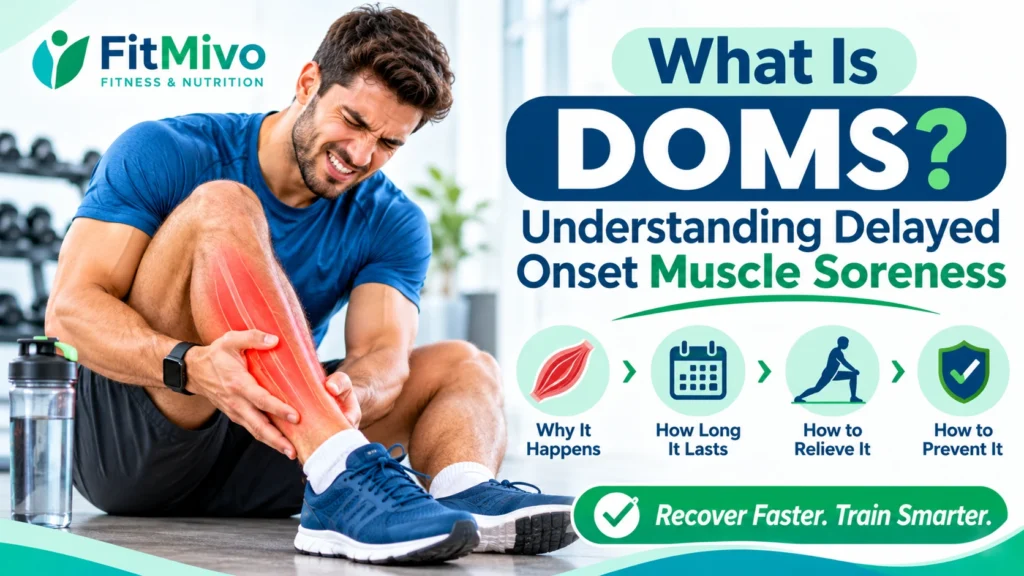
Have you ever finished a workout feeling fine, only to wake up the next morning with stiff, sore muscles? This experience is common, especially after trying a new exercise or increasing the intensity of your training.
This delayed muscle discomfort is known as DOMS (Delayed Onset Muscle Soreness). It is a common response to unfamiliar or demanding physical activity and can affect beginners and experienced athletes alike.
Although muscle soreness is usually temporary, understanding why it happens can help you manage recovery, plan your workouts, and avoid unnecessary training mistakes.
In this guide, you will learn what DOMS means, what causes it, how long it lasts, how to manage the discomfort, and how to reduce the likelihood of experiencing severe soreness after exercise.
What Is DOMS?
DOMS stands for Delayed Onset Muscle Soreness. It describes muscle pain and stiffness that develop several hours after physical activity rather than during the exercise itself.
It commonly occurs after:
- Trying a new exercise or workout routine.
- Increasing exercise intensity or volume.
- Performing unfamiliar movements.
- Returning to exercise after a long break.
- Performing exercises that involve significant eccentric muscle contractions.
Eccentric contractions happen when a muscle lengthens while producing force. For example, lowering a dumbbell during a biceps curl or controlling your body while walking downstairs involves eccentric muscle activity.
DOMS is generally temporary and improves as the body recovers.
Muscle soreness is not a requirement for an effective workout. You can build strength and improve fitness even when you experience little or no DOMS.
What Causes DOMS?
DOMS is associated with unfamiliar or demanding exercise, particularly activities involving eccentric muscle contractions.
These movements can produce microscopic changes in muscle and surrounding tissues, followed by a complex response involving inflammation and increased sensitivity in pain receptors.
Scientists now understand that DOMS involves several interacting processes rather than one single cause.
1. Unfamiliar Physical Activity
When you introduce a new exercise, your muscles experience a type of workload they may not be accustomed to.
This is one reason people often experience soreness after starting a new workout program or returning to the gym following a break.
2. Eccentric Muscle Contractions
Eccentric movements are particularly associated with exercise-induced muscle soreness.
Examples include:
- Lowering weights during resistance exercises.
- Walking or running downhill.
- Lowering your body during a squat.
- Controlling the downward phase of a push-up.
These movements can create substantial mechanical demands on working muscles, especially when performed at unfamiliar intensities.
3. Increased Training Intensity
Suddenly increasing workout duration, resistance, repetitions, or total training volume can expose your muscles to more stress than they are prepared to handle.
Gradual changes give your body more opportunities to adapt to new training demands.
What Are the Symptoms of DOMS?
DOMS can affect different muscles depending on the exercises you performed. Symptoms are generally concentrated in the muscles that experienced the greatest training demands.
Common symptoms include:
- Muscle tenderness: Discomfort when pressing or touching the affected muscles.
- Stiffness: Muscles may feel tight or difficult to move normally.
- Reduced range of motion: Certain movements may temporarily feel uncomfortable.
- Temporary weakness: The affected muscles may feel less powerful than usual.
- Localized swelling: Some people experience mild swelling around the affected area.
The severity can vary from mild discomfort to more noticeable soreness that affects everyday movement.
When Does DOMS Start and How Long Does It Last?
One of the defining characteristics of DOMS is its delayed appearance.
Unlike discomfort caused by an injury during exercise, DOMS usually develops gradually after the workout.
| Time After Exercise | What May Happen |
|---|---|
| During exercise | DOMS is generally not present yet. |
| 12–24 hours | Muscle soreness may begin to develop. |
| 24–72 hours | Soreness commonly becomes most noticeable. |
| Following days | Symptoms generally begin to improve. |
Most cases improve within a few days. However, recovery time varies depending on the exercise, training intensity, and individual response.
If pain continues for more than a week, becomes severe, or does not improve with rest, it is important to seek medical advice rather than assuming it is ordinary DOMS.
DOMS vs. Muscle Injury: What Is the Difference?
Not every type of muscle pain after exercise is DOMS. Understanding the differences can help you recognize when something may require medical attention.
| Feature | DOMS | Possible Muscle Injury |
|---|---|---|
| Onset | Usually delayed | May occur suddenly |
| Pain | Often a dull ache or tenderness | May be sharp or localized |
| Location | Often affects exercised muscles | May affect a specific injured area |
| Recovery | Usually improves over several days | Depends on injury severity |
This comparison is a general guide, not a diagnostic test. Muscle injuries can vary, and some symptoms overlap with DOMS.
Important: Severe muscle pain, significant swelling, unusual weakness, or dark-colored urine may indicate a serious condition such as rhabdomyolysis. Seek urgent medical evaluation if these symptoms occur.
How to Relieve DOMS and Support Muscle Recovery
Although there is no instant solution for DOMS, several practical strategies may help reduce discomfort while your muscles recover.
1. Allow Enough Recovery Time
Rest is one of the most important parts of managing muscle soreness.
If a particular muscle group is significantly sore, avoid repeating intense training for that area until symptoms improve.
You can still train other muscle groups if you feel comfortable and can exercise safely.
2. Try Light Physical Activity
Gentle movement, such as walking or easy cycling, may help reduce the feeling of stiffness.
Keep the activity comfortable and avoid turning an easy recovery session into another demanding workout.
3. Stay Hydrated
Maintaining normal hydration supports general health and normal muscle function.
Drink fluids regularly according to your activity level, environment, and individual needs.
However, drinking extra water does not instantly eliminate DOMS or guarantee faster muscle recovery.
4. Get Enough Sleep
Sleep is an important part of physical recovery.
Maintaining a regular sleep schedule and allowing enough time for rest can support your body’s adaptation to exercise.
5. Eat Balanced Meals
Your body needs adequate energy and nutrients to support training and recovery.
A balanced eating pattern can include:
- Protein-rich foods to support muscle repair.
- Carbohydrate sources to replenish energy stores.
- Fruits and vegetables for vitamins and minerals.
- Healthy fats as part of a balanced diet.
Consistent nutrition is more important than relying on a single food or supplement to eliminate soreness.
6. Consider Gentle Massage or Foam Rolling
Some people find that gentle massage or foam rolling helps temporarily reduce muscle discomfort.
Use comfortable pressure and avoid aggressive techniques on painful, swollen, or injured areas.
These methods may help with symptoms, but they do not guarantee faster tissue recovery.
7. Use Heat or Cold for Comfort
Some people find warm showers, heating pads, or cold applications helpful for managing temporary soreness.
Choose a comfortable method, protect your skin, and avoid applying extreme temperatures directly to the body.
How to Prevent Severe DOMS After Exercise
You may not be able to prevent DOMS completely, especially when trying unfamiliar exercises. However, several habits can help reduce the likelihood and severity of soreness.
1. Increase Workout Intensity Gradually
Avoid suddenly doubling your training volume or resistance.
Introduce new exercises and challenging movements gradually so your muscles have time to adapt.
2. Warm Up Before Training
A suitable warm-up prepares your body for exercise.
Consider starting with light cardio and movement patterns related to your upcoming workout.
3. Avoid Excessive Training Volume
Performing too many sets or repetitions when you are not accustomed to them can increase post-workout soreness.
Start with a manageable amount of exercise and adjust your routine according to your recovery.
4. Maintain a Consistent Routine
Regular exercise helps your body become more accustomed to familiar physical demands.
This repeated exposure can produce a protective adaptation known as the repeated-bout effect, meaning that repeating a familiar exercise often causes less soreness than the first exposure.
5. Do Not Train Through Serious Pain
Normal muscle fatigue is different from sharp or unusual pain.
If an exercise causes sudden pain, stop and assess the situation rather than forcing yourself to finish the workout.
Does Muscle Soreness Mean Your Workout Was Effective?
No. Feeling sore after exercise does not necessarily mean that your workout was more effective.
DOMS can occur after unfamiliar physical activity, but muscle soreness is not a reliable measure of muscle growth, strength improvement, or overall fitness progress.
You can have a productive workout without experiencing significant soreness.
Better ways to evaluate your training include:
- Gradual improvements in exercise performance.
- Consistent training habits.
- Better movement control and technique.
- Improved strength and endurance over time.
- Appropriate recovery between workouts.
Focus on long-term progress rather than trying to make every workout leave you sore.
Frequently Asked Questions About DOMS
Is DOMS normal after a workout?
Yes. DOMS is common after unfamiliar or demanding physical activity, particularly exercises involving eccentric muscle contractions. However, severe pain should not automatically be considered normal soreness.
How long does DOMS usually last?
DOMS generally improves within a few days. Symptoms commonly become most noticeable between 24 and 72 hours after exercise, although recovery time varies between individuals.
Should I exercise when I have DOMS?
Light activity may be comfortable when soreness is mild. However, avoid intense exercise targeting significantly sore muscles until you have recovered sufficiently. Stop if movement causes unusual or worsening pain.
Does stretching prevent DOMS?
Stretching can be useful for mobility and flexibility, but research does not show that stretching before or after exercise reliably prevents DOMS.
Does DOMS mean my muscles are growing?
No. Muscle soreness does not directly indicate muscle growth. Strength and muscle development can occur without significant post-workout soreness.
Why do I feel more sore after returning to the gym?
When you return to exercise after a break, your muscles may be less accustomed to the workload. This can make soreness more noticeable, particularly if you restart with demanding sessions.
Can beginners experience DOMS?
Yes. Beginners commonly experience DOMS when starting resistance training or other unfamiliar physical activities. Starting gradually can help make the adjustment easier.
Is it possible to prevent DOMS completely?
Not always. Gradual progression, appropriate warm-ups, and adequate recovery can reduce the likelihood and severity of soreness, but DOMS may still occur after unfamiliar exercise.
Final Thoughts
Delayed Onset Muscle Soreness is a common experience after unfamiliar or challenging exercise. Although it can make everyday movements uncomfortable, it usually improves within a few days.
Understanding the difference between normal muscle soreness and possible injury can help you make better decisions about training and recovery.
Start new workouts gradually, prioritize proper recovery, maintain balanced nutrition, and listen to your body.
Remember that successful fitness progress does not depend on how sore you feel after every workout. Consistency, appropriate training, and recovery are much more important for building a healthier and stronger body.
Scientific Sources and Further Reading
- American College of Sports Medicine (ACSM): Delayed Onset Muscle Soreness
- Cleveland Clinic: Delayed Onset Muscle Soreness (DOMS)
- Frontiers in Sports and Active Living (2026): Rethinking the Neurophysiology of DOMS
- Journal of Functional Morphology and Kinesiology (2025): Non-Pharmacological Strategies for DOMS
Explore More FitMivo Guides
Continue exploring our fitness and health resources:
- What Is Progressive Overload? A Guide to Building Muscle and Strength
- What Is VO2 Max? A Complete Guide to Cardiovascular Fitness
- What Is TDEE? A Complete Guide to Daily Energy Expenditure
- Explore FitMivo Fitness Calculators
Medical Disclaimer: This article is intended for educational purposes only and does not replace professional medical advice. Severe muscle pain, significant swelling, unusual weakness, or dark urine require prompt medical evaluation. Consult a qualified healthcare professional if symptoms are persistent or concerning.