
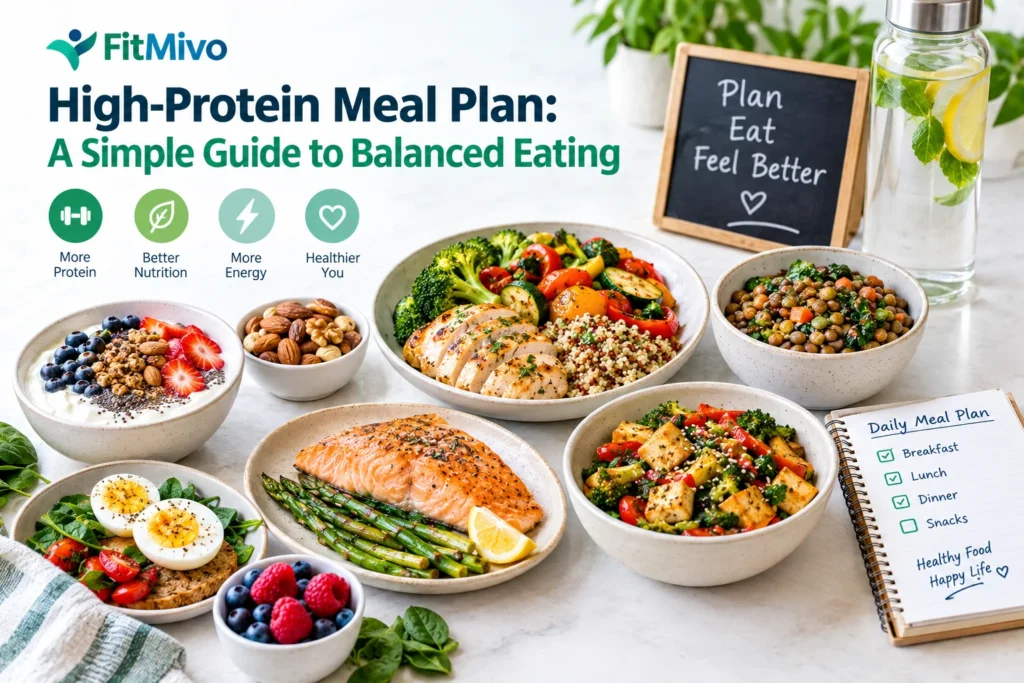
Planning meals around protein-rich foods can make it easier to meet your nutritional needs while enjoying a varied and balanced diet. Whether you want to support muscle development, stay active, or simply improve your everyday eating habits, a practical high-protein meal plan can help you organize your meals.
You do not need complicated recipes or expensive supplements to get started. Eggs, yogurt, fish, chicken, beans, lentils, tofu, and other everyday foods can all contribute protein to your diet.
This guide provides meal ideas, an example one-day menu, plant-based alternatives, and practical tips for adjusting portions to your individual needs.
1. What Is a High-Protein Meal Plan?
A high-protein meal plan is an eating plan that deliberately includes protein-rich foods throughout the day. It may emphasize foods such as eggs, poultry, fish, dairy products, beans, lentils, tofu, and tempeh.
Protein provides amino acids that your body uses to build and repair tissues, maintain muscle, and produce enzymes and other important substances. Protein is essential, but it is only one part of a healthy diet.
A balanced plan should also provide carbohydrates, healthy fats, fiber, vitamins, minerals, and enough total energy for your needs. Vegetables, fruit, whole grains, and other nutrient-rich foods therefore remain important.
A high-protein plan does not necessarily mean eating very large portions of meat or avoiding carbohydrates. Instead, it means choosing appropriate protein sources and distributing them sensibly across meals.
2. How Much Protein Do You Need?
Protein requirements vary from person to person. For many healthy adults, the general recommended dietary allowance is approximately 0.8 grams of protein per kilogram of body weight per day. This is a reference value for basic needs, not a personalized target for every active person.
People who exercise regularly, older adults, and individuals with particular goals or health circumstances may have different needs. The appropriate intake should be considered alongside total energy intake, activity, and overall health.
To learn more about your own needs, read our guide: How Much Protein Do You Need a Day?
Should You Eat Protein at Every Meal?
Including a protein source at most meals can be a convenient way to spread your intake across the day. You do not need to follow a strict schedule or consume exactly the same amount at every meal.
For example, breakfast might include eggs or yogurt, lunch might include beans or chicken, and dinner might include fish or tofu. Snacks can contribute protein when needed, but they are not essential for everyone.
3. A One-Day High-Protein Meal Plan
The following menu is an example of how protein-rich foods can fit into a varied day of eating. It is not a personalized calorie prescription, and the protein totals will vary with ingredients, brands, and portion sizes.
| Meal | Example menu | Protein sources |
|---|---|---|
| Breakfast | Plain Greek yogurt with oats, berries, and a small portion of nuts | Greek yogurt, oats, nuts |
| Morning snack (optional) | A boiled egg and a piece of fruit | Egg |
| Lunch | Grilled chicken, brown rice, and mixed vegetables | Chicken |
| Afternoon snack (optional) | Hummus with carrots and whole-grain crackers | Chickpeas, tahini |
| Dinner | Baked salmon with potatoes and green vegetables | Salmon |
Adjust the portions to your hunger, energy needs, food preferences, and activity level. If you do not eat fish or meat, the alternatives below can help you build a similar pattern using plant-based foods.
How Can You Adapt This Menu?
- For a vegetarian pattern: Replace chicken or fish with tofu, tempeh, lentils, beans, eggs, or dairy foods, depending on what you eat.
- For a vegan pattern: Use beans, lentils, chickpeas, tofu, tempeh, edamame, nuts, and seeds. Choose fortified plant beverages when appropriate.
- For a lower-cost plan: Consider eggs, dried lentils, beans, canned fish, plain yogurt, and tofu when available and affordable.
- For a busy schedule: Prepare a few ingredients ahead of time, such as cooked beans, boiled eggs, washed vegetables, or cooked grains.
4. High-Protein Meal Ideas
There is no need to eat the same foods every day. Use the following combinations as a starting point and adapt them to your taste.
Breakfast Ideas
- Scrambled eggs with vegetables and whole-grain toast.
- Plain Greek yogurt with oats and fruit.
- Cottage cheese with tomatoes and whole-grain bread.
- Oatmeal prepared with milk and served with nuts or seeds.
- Tofu scramble with vegetables and a whole-grain wrap.
Lunch Ideas
- Chicken and vegetable bowl with rice or quinoa.
- Lentil soup with whole-grain bread and a side salad.
- Tuna and bean salad with vegetables.
- Chickpea and quinoa bowl with tahini dressing.
- Tofu stir-fry with vegetables and brown rice.
Dinner Ideas
- Baked fish with potatoes and steamed vegetables.
- Lean poultry with roasted vegetables and whole grains.
- Bean and vegetable chili.
- Tempeh with stir-fried vegetables and rice.
- Lentil curry served with rice and vegetables.
Snack Ideas
- Plain yogurt or cottage cheese.
- A boiled egg.
- Roasted chickpeas.
- A small portion of nuts or seeds.
- Edamame.
- Hummus with vegetable sticks.
Snacks are optional. Choose them according to hunger, your schedule, and your overall nutritional needs rather than feeling that you must eat between every meal.
5. Plant-Based High-Protein Meals
Plant-based diets can provide protein through a combination of beans, lentils, chickpeas, soy foods, nuts, seeds, and grains. Many of these foods also provide fiber and other nutrients.
| Food | Typical serving | Approximate protein |
|---|---|---|
| Lentils, cooked | 1 cup | About 18 g |
| Chickpeas, cooked | 1 cup | About 14–15 g |
| Black beans, cooked | 1 cup | About 15 g |
| Firm tofu | 100 g | About 10–17 g |
| Tempeh | 100 g | About 19–21 g |
| Quinoa, cooked | 1 cup | About 8 g |
| Almonds | 28 g | About 6 g |
These values are approximate. Protein content depends on the variety, brand, preparation method, and serving size. Check product labels when a more precise estimate is important.
Example of a Plant-Based Day
- Breakfast: Oats prepared with fortified soy beverage, topped with nuts and fruit.
- Lunch: Lentil and vegetable bowl with whole grains.
- Snack: Hummus with carrots or a portion of roasted chickpeas.
- Dinner: Tofu and vegetable stir-fry served with rice.
If you follow a fully vegan diet, pay attention to nutrients that may require additional planning, including vitamin B12. A qualified dietitian can help you plan a nutritionally adequate diet if you need individualized support.
6. Meal Prep Tips for a High-Protein Diet
Meal preparation can make it easier to follow a balanced eating pattern without spending a long time cooking every day.
Plan a Few Meals Ahead
Start by choosing two breakfasts, two lunches, and two dinners that you enjoy. Repeat meals when convenient, then rotate ingredients to maintain variety.
Prepare Convenient Ingredients
- Cook a batch of lentils, beans, or grains.
- Prepare chicken, tofu, or another protein source for several meals.
- Wash and cut vegetables so they are ready to use.
- Keep convenient options such as canned beans, canned fish, eggs, or plain yogurt available.
- Store cooked foods safely in the refrigerator and follow appropriate food-safety guidance.
Build a Balanced Plate
A useful starting point is to include a protein source, vegetables or fruit, a carbohydrate source, and some healthy fats across your meal. The proportions should reflect your individual needs and preferences.
Carbohydrates are not the enemy of a high-protein diet. Whole grains, potatoes, fruit, and other carbohydrate-containing foods can provide energy and important nutrients, especially for active people.
7. High-Protein Meal Plans for Different Goals
For Muscle Development
Muscle development requires more than eating protein. Resistance training, adequate total energy, recovery, and sleep all contribute. A protein-rich meal pattern can support these efforts, but no single food or meal plan guarantees muscle growth.
Choose a protein intake appropriate for your circumstances and distribute protein-containing foods across meals in a way you can maintain consistently.
For Weight Management
Protein can be part of a satisfying meal pattern, but weight management depends on several factors, including overall energy intake, food quality, activity, sleep, and health circumstances.
Rather than eliminating entire food groups, focus on balanced meals, appropriate portions, and sustainable habits. For more information, see our guide to Total Daily Energy Expenditure (TDEE).
For General Health
You do not need a specialized diet to eat well. Include varied protein sources, vegetables, fruit, whole grains, and appropriate fats. Choose foods you enjoy and can access regularly.
8. Common High-Protein Meal Plan Mistakes
- Focusing only on protein: A balanced diet also needs fiber, carbohydrates, fats, vitamins, and minerals.
- Eating the same protein source every day: Variety helps provide a wider range of nutrients and makes meals more enjoyable.
- Assuming everyone needs the same amount: Protein needs differ with body size, age, activity, and health status.
- Relying entirely on supplements: Protein powders can be convenient, but many people can meet their needs with ordinary foods.
- Ignoring portion sizes: Protein totals change according to how much you eat and how the food is prepared.
- Making the plan too complicated: Simple meals using familiar ingredients are often easier to maintain.
9. Frequently Asked Questions
1. What should I eat on a high-protein meal plan?
Include foods such as eggs, yogurt, fish, poultry, beans, lentils, tofu, and tempeh. Pair them with vegetables, fruit, whole grains, and other foods to create balanced meals.
2. How many meals should I eat each day?
There is no single ideal number of meals for everyone. Three meals a day may work well for some people, while others prefer a different pattern. Choose a schedule that supports your appetite, routine, and nutritional needs.
3. Can I follow a high-protein meal plan without meat?
Yes. Lentils, beans, chickpeas, tofu, tempeh, edamame, nuts, seeds, and—if included in your diet—eggs and dairy products can contribute protein.
4. Do I need protein at every meal?
You do not have to follow a strict rule, but including protein-containing foods in several meals can make it easier to meet your daily needs.
5. Is a high-protein meal plan good for weight loss?
Protein can be part of a weight-management plan, but results depend on overall energy intake, food choices, physical activity, and other individual factors. A high-protein diet does not automatically cause weight loss.
6. Can I build muscle without protein supplements?
Yes. Many people can obtain sufficient protein from food. Supplements are optional and may be useful for convenience, but they are not essential for everyone.
7. Are high-protein diets safe for everyone?
No single dietary approach suits everyone. People with kidney disease or other health conditions that affect nutrition should seek individualized guidance before substantially increasing protein intake.
8. How can I make a high-protein meal plan more affordable?
Consider eggs, dried lentils, beans, canned fish, plain yogurt, tofu, and seasonal produce. Planning meals and using leftovers can also reduce waste and costs.
Key Takeaways
- A high-protein meal plan includes protein-rich foods throughout the day.
- The right protein intake depends on individual needs and health circumstances.
- Animal and plant foods can both contribute to daily protein intake.
- Balanced meals should include more than protein alone.
- Simple meal preparation and food variety can make healthy eating easier to maintain.
- Individualized medical or nutrition advice may be important for people with certain health conditions.
Explore More Nutrition Guides on FitMivo
Build your nutrition knowledge with our related guides:
Sources and Further Reading
- Harvard T.H. Chan School of Public Health: Protein
- MedlinePlus: Dietary Proteins
- National Institute of Diabetes and Digestive and Kidney Diseases: Kidney Disease Information
- USDA MyPlate: Healthy Eating Guidance
Medical disclaimer: This article is for general educational purposes only and is not a substitute for individualized medical or nutrition advice. Protein needs vary by person. If you have a medical condition that affects your diet, consult a qualified healthcare professional or registered dietitian.
Last reviewed: October 2026.